

❋
On a steep sidewalk, a stroller should feel secure, controlled, and easier to push — especially with a child, a full basket, and real life in motion.
What to look for in a stroller for hills
A good stroller for hills does more than roll uphill
❋ Support on the climb
Help you overcome gravity on the way up.
❋ Security when you stop
Stay securely in place when you pause on an incline.
❋ Control on the descent
Help you feel in control while going downhill.

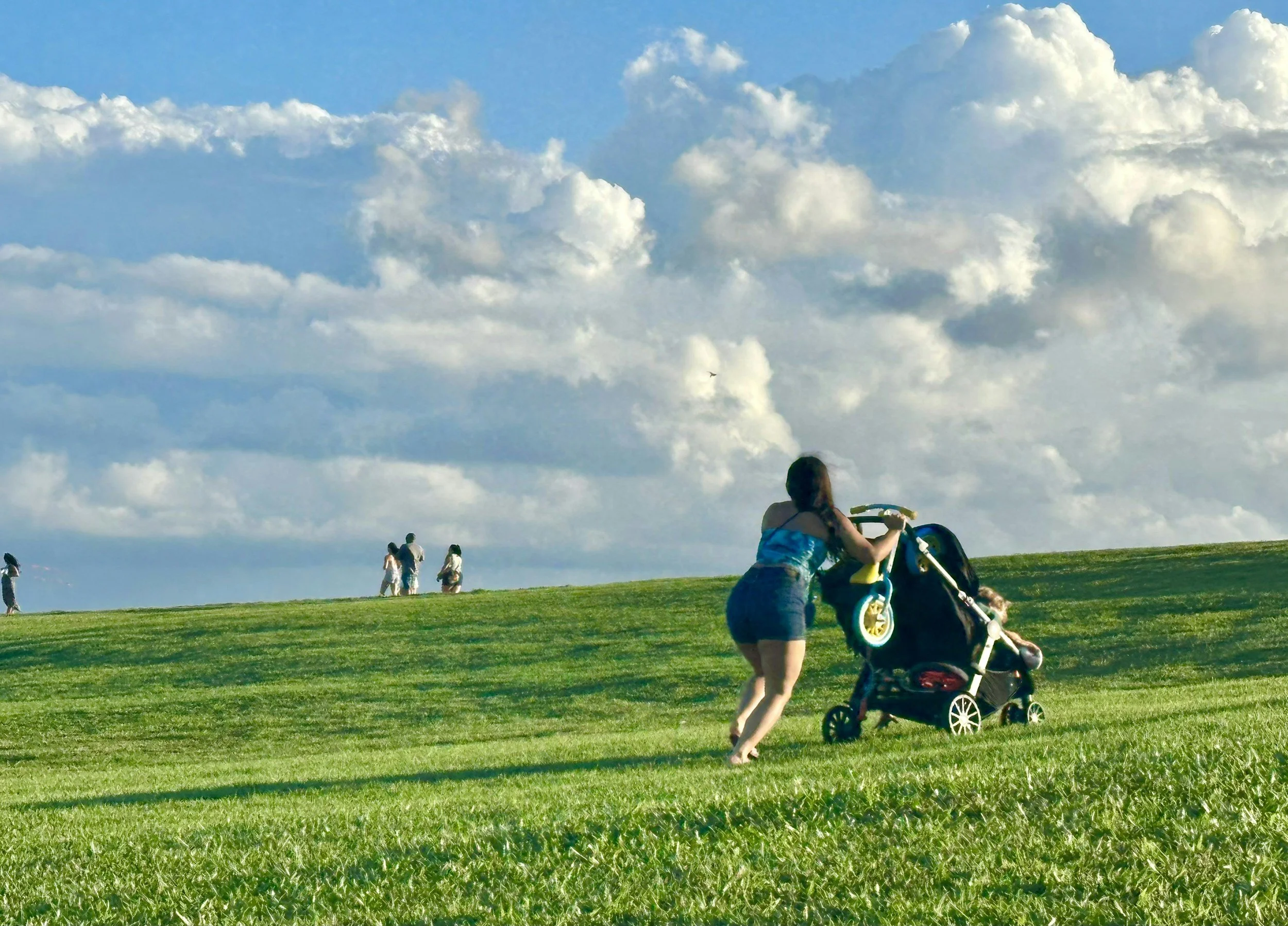
Why hills change what matters
Pushing a stroller can feel perfectly fine on flat ground and far more demanding on a hill.
Add a diaper bag, groceries, a coffee, or an older child walking beside you, and the difference becomes obvious.

What to look for in a stroller for hills
Push supportA hill-ready stroller should help reduce effort on the climb, especially with a child and gear onboard.
Braking confidenceGoing downhill matters as much as going uphill. Controlled braking is part of what makes a stroller feel safe on an incline.
Parking on an inclineWhen you stop to open a door, help a toddler, or reach for a bag, the stroller should stay where it belongs.
Stability under real loadA stroller should stay composed when family life adds weight: a diaper bag, groceries, changing terrain, and longer walks.
What kind of support actually helps on hills?
A stroller for hills should do more than add power. What matters most is how supported you feel when the sidewalk gets steeper, the basket gets heavier, and your attention is already split.
That is why hill support is not just about motors. Controlled braking, reliable parking, and a steady, composed feel matter just as much. On an incline, confidence comes from knowing the stroller helps on the way up, stays controlled on the way down, and stays put when you stop.
The goal is not speed. It is less strain on your body, more control in motion, and more confidence in the moments family life asks the most of you.

How Rosa approaches hills
Designed to make steep everyday walks feel lighter, steadier, and easier to manage.
Rosa’s dual 500W motors are designed to help heavy loads feel lighter and hills feel more manageable.
500W duo motorsIntegrated sensors continuously read terrain and load, adjusting support so the push stays more consistent.
Real-time adjustment Braking on release and on gradeIf you let go of the handlebar, Rosa brakes. On an incline, gradient-responsive braking helps keep the stroller controlled.
When you stop, Rosa parks automatically — an extra layer of confidence for steep sidewalks and everyday interruptions.
Automatic parkingRosa’s stance is designed to feel planted and stable on steeper everyday routes.
Staying plantedWhere this matters the most
-
Steep sidewalks, curbs, crossings, and stop-start walks.
-
A full basket, a diaper bag, coffee in hand, and a toddler who suddenly needs you.
-
When the route is beautiful but the grade makes a traditional stroller feel like work.
Best for families who walk where the ground doesn’t stay flat
Especially relevant if your routes regularly include steep sidewalks, ramps, bridges, or uneven terrain.
A hill-ready stroller should feel calm, not demanding
Many strollers are designed to look refined on flat ground. Hills ask a different question: how supported do you feel when the load gets heavier, the sidewalk gets steeper, and your attention is split?
Questions parents ask about strollers for hills
-
A stroller that works well on steep hills should help reduce the effort of climbing, stay controlled on the way down, and remain secure when stopped on an incline. The best options combine support in motion with braking, parking, and stable handling.
-
Yes — especially when hills are part of your everyday walks. Motor support can help reduce the effort of pushing uphill, particularly with a child, a full basket, or longer routes, but it is most useful when paired with strong braking and parking support as well.
-
On a hill, braking helps keep the stroller controlled as you move downhill, while parking helps keep it secure when you stop. Together, they can make steep sidewalks feel more manageable and more reassuring in everyday moments.
-
Yes. Automatic parking can add confidence in everyday moments when you need to stop, open a door, reach for something, or momentarily take your hands off the handlebar on an incline.
-
Not necessarily. Weight alone does not make a stroller better on hills. What matters more is how well the stroller supports the push, stays controlled on descents, and feels stable under the load of real family life.
-
Look for a stroller that helps on both the climb and the descent. Push support, reliable braking, secure parking, and stable handling with a child and gear onboard can make a big difference if your daily walks include steep sidewalks, ramps, or uneven streets.
-
It can, but that depends on the stroller. A loaded basket, diaper bag, or extra gear can quickly make a stroller feel heavier on hills, which is why support under real-world load matters — not just how the stroller feels when empty in a showroom.
-
For many families, yes. Hills are one of the clearest situations where intelligent support can make a daily difference, because the benefit is physical, immediate, and easy to feel on every walk.
-
Both can help, but neither tells the whole story on its own. A stroller for hills should be judged by how supported, controlled, and secure it feels overall — not by a single spec. The best hill-ready strollers combine more than one advantage. Glüxkind Rosa pairs large 11” rear wheels with motor support.
-
Because hills magnify effort. A stroller that feels manageable on flat ground can feel much heavier and less controlled once you add an incline, a child, and the gear that comes with everyday family life.
Explore a stroller designed to make hills feel lighter
See how Glüxkind Rosa brings support in motion, intelligent braking, and everyday calm together in one beautifully integrated stroller.